
Battery cell manufacturing for the energy transition

Whether in electric vehicles, medical technology or smart devices, batteries have become a fixture of our everyday lives. As the global energy transition advances and the need for sustainable and low-emission technologies increases, demand for powerful energy storage solutions that conserve resources is also on the rise.

Battery cells represent a key technology in the energy transition, but strong research and rapid innovation transfers are the only way to tap into their full potential and meet the demand for European battery cell manufacturing. 
Insights into Fraunhofer research

Production and infrastructure

Battery cell production in Europe is rapidly picking up steam. Production capacity is expected to ramp up to more than two terawatt-hours per year between now and 2030. This figure is above projected demand.

Forecasting the ramp-up of battery cell production in Europe


The establishment of the Fraunhofer Research Institution for Battery Cell Production FFB is a major project for the Fraunhofer-Gesellschaft. As one of Germany’s largest research building projects, it is one of a kind worldwide. The research institution works at the interface between research and industry, with the mission of developing innovative production processes for battery cells and validating them on an industrial scale. 

""
© Dennis Neuschäfer-Rube
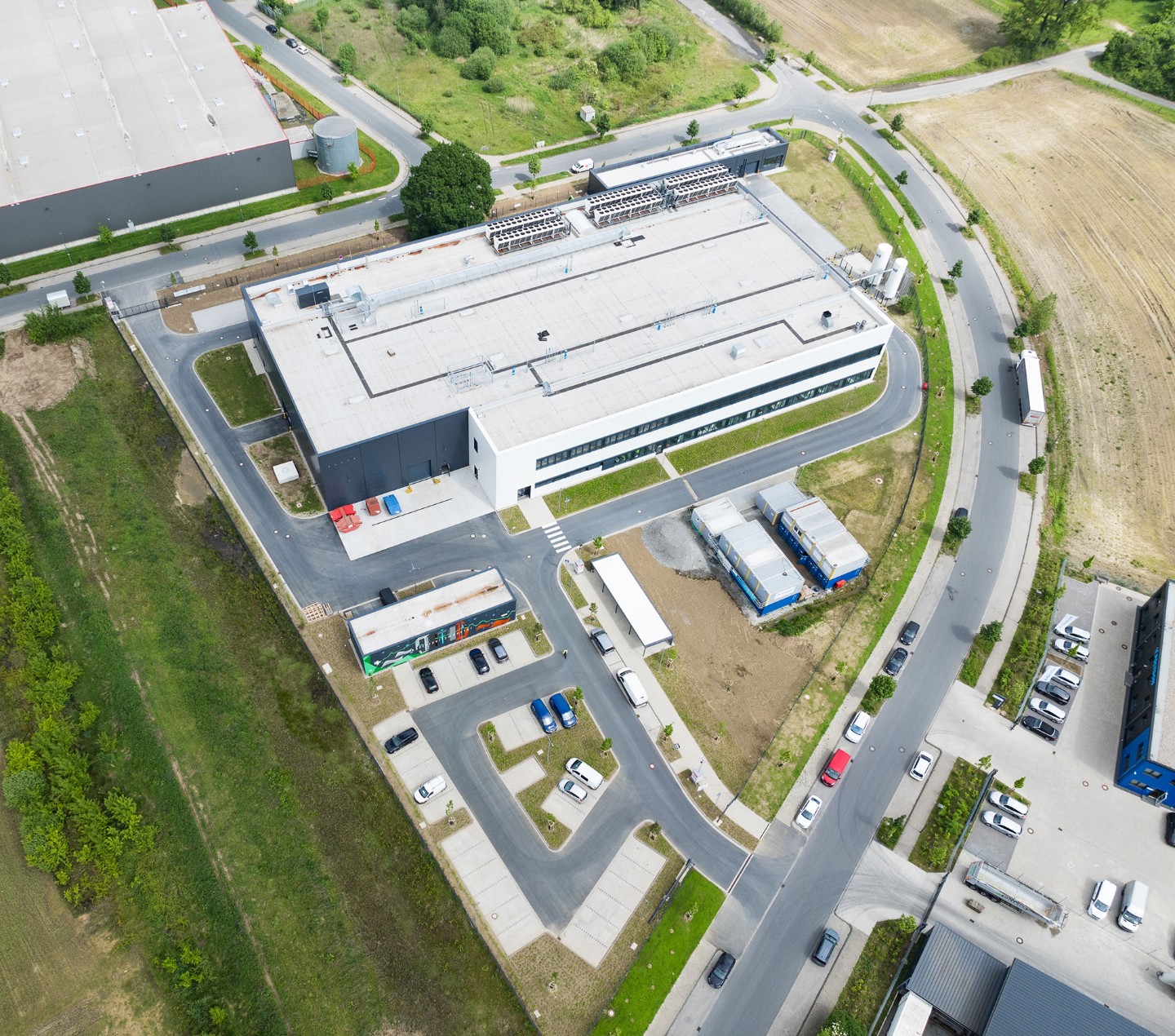
The FFB PreFab is an open battery cell factory for research and development purposes. It can cover all of the steps in battery cell production, from electrode manufacturing to cell assembly and formation. The integrated pilot line can produce complete pouch cells with reproducible results.

Gigascaling research production

One key element of these activities is the FFB PreFab, located in Münster, where both the production environment for pouch and prismatic cells and the process chain are fully digitalized. At this facility, businesses of all sizes, from SMEs to major companies, can test and scale production of new battery cells and innovative plant and systems technologies that are approaching the series production stage. The next stage of development will take place at the FFB Fab, which is under construction. It will be home to a fully digitalized production line for large-scale battery cell production.


Project funding

This large-scale project is receiving funding from the BMFTR and the State of North Rhine-Westphalia. The German federal government will be supporting Fraunhofer FFB with up to 500 million euros in funding for research facilities and projects, and North Rhine-Westphalia is to provide as much as 320 million euros for land and new buildings. 

Disciplines along the value chain

Battery cell research requires an interdisciplinary approach, with people from different subfields working together closely. The facility pools expertise from across a wide range of fields, such as electrochemistry, process engineering, mechanical engineering, sustainability and economics. This diversity forms the basis for innovation along the entire battery cell production value chain.


Digitalized battery cell production 

As in many areas of professional and personal life, digital transformation affords great advantages in the production of battery cells. Creating interconnections among machines, products, the building and their data with an eye to Industry 4.0 unlocks efficiency and sustainability in cell production.


Factory planning

Ramping up production in the next few years will be the only way to meet the exponentially rising demand for battery cells. But building a gigafactory still poses challenges for the industry in many cases. Fraunhofer FFB offers solutions to support companies in overcoming these challenges.


Process innovation and plant and systems technology

The goal is to make battery cell production both more efficient and more sustainable. Known technologies are optimized, and innovative approaches such as dry coating are brought to the point of readiness for the market. All these activities are geared toward enhancing the competitiveness of battery cell production in Europe while at the same time reducing environmental impact.


Batteries as a new field of business

The growing battery market offers numerous opportunities as the value chain for battery cells holds out possibilities for expansion across all areas, from the raw materials industry to suppliers of battery cell components, battery cell manufacturing and integration and beyond to reuse and recycling of batteries and their components.


Battery cell innovation and sample production

From all-solid-state batteries to sodium-ion and lithium-sulfur batteries and incremental innovative tweaks to existing lithium-ion battery cells, one thing is clear: Development of new cell generations is advancing, and new cell types are constantly hitting the market. 


Material cycle and sustainability

The climate crisis is one of the biggest challenges facing humanity right now, and it requires a rapid shift away from fossil fuels. At Fraunhofer, we create resource-efficient solutions for existing production processes that lower costs, waste and carbon emissions in the long term. This can help to make battery production more sustainable.  

Alternative battery technologies

The surging worldwide demand for batteries is currently met primarily by lithium-ion batteries. However, geopolitical dependencies and resource availability are driving an increase in the exploration of alternative battery technologies. With different levels of technological maturity and various technological challenges in play, these alternative battery technologies are expected to be ready for market launch at different times. There are various alternatives.


The innovative potential of sodium-ion batteries

Sodium-ion technology is a promising and competitive alternative.

Researchers working on the Na.Ion.NRW project are developing a sustainable electrochemical storage concept based on sodium-ion technology, utilizing locally available, cost-effective and environmentally friendly raw materials for applications in stationary energy storage systems. 


Solid-state batteries: next-generation high-energy storage

Rechargeable solid-state batteries are viewed as the next generation in high-energy storage. Production of batteries that consist exclusively of solid materials is a challenge both at the cell level and for the entire battery system as a whole. It requires the use of new production technologies alongside innovative cell assembly methods. This is where the Fraunhofer institutes come in, contributing their knowledge in the fields of material development, component production, cell assembly and system design. 


HiQ-CARB Project: More Sustainable Conductive Carbon Additives for Lithium-Ion Batteries

Given the growing demand for rechargeable batteries due to the transition to electric vehicles and renewable energies, the development of innovative and environmentally friendly materials is of central importance. The joint HiQ-CARB project, funded by the European Union/EIT RawMaterials, has made significant progress in this key technology for reducing CO2 emissions over the past four years.

Strong support for forward-looking research


The electric future of aviation

Research in the field of electric aircraft is still in its infancy. However, successful electrification of aviation requires not only new propulsion technologies but also practical solutions for supplying energy on the ground. In the MOMO-C research project, researchers are developing a mobile, modular charging unit for electrically operated short-haul aircraft. 


Recycling critical raw materials

Many end-of-life products wind up in landfill or are exported to other countries as scrap, leading to a loss of valuable raw materials. The SeRoBatt research project aims to identify and tap into secondary sources of raw materials for battery cell production. The researchers are focusing in particular on glass ceramics, the second largest lithium product group after batteries, which currently do not have a regulated material cycle.


Development of a junior research group

At Fraunhofer FFB, the BMFTR is supporting the development of a junior research group focusing on developing and establishing innovative and resource-efficient approaches to the production of electrodes in lithium-ion battery manufacturing.


Interconnections along the entire value chain

The Transformation Hub Battery Value Chain (TraWeBa) brings companies together along the entire battery value chain, from cell chemistry to production and beyond to recycling and second use. The consortium involves four Fraunhofer institutes, which are working together to identify battery trends in Germany and, on that basis, develop a systematic, demand-driven and sustainable concept for knowledge and technology transfer via the battery value chain.

Fraunhofer Battery Alliance

Across 26 institutes and research units, Fraunhofer pools its expertise along the entire value chain, from material research to cell production. As an active partner in all of the flagship battery projects funded by the German Federal Ministry of Research, Technology and Space (BMFTR), Fraunhofer supports industrial applications for battery technology and helps to safeguard Germany’s competitiveness in this future market.