Press / Newsroom

Cancel
  • Executive board of the Fraunhofer-Gesellschaft soon to be fully staffed / 2025

    The Fraunhofer-Gesellschaft Welcomes Constantin Häfner as its New Executive Vice President of Research and Transfer

    Research News / February 14, 2025

    © Markus Jürgens / Fraunhofer

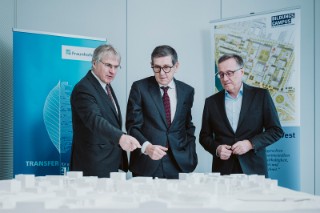
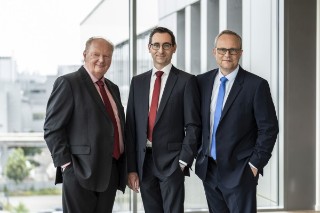
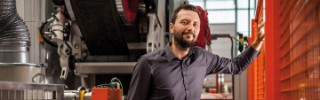
    On February 17, 2025, Constantin Häfner will take up his new position as Fraunhofer’s executive vice president of Research and Transfer. The Fraunhofer senate elected him to the board at its meeting on June 12, 2024. The renowned laser physicist has been the executive director of the Fraunhofer Institute for Laser Technology ILT in Aachen since 2019. With Häfner taking office, the executive board of the Fraunhofer-Gesellschaft will be complete.

    more info
  • Studies on aircraft cabin air quality / 2025

    Simulator Helps Characterizing Air Pollution in Aircraft Cabins

    Research News / February 03, 2025

    Dr. Florian Mayer bei der Messvorbereitung am Bleed Air Contamination Simulator
    © Fraunhofer IBP

    “Fume events” occur when fluids such as engine oil or hydraulic fluid contaminate the air inside an airplane cabin via the “bleed air” used for air supply and conditioning. Measurements taken in flight do not allow for determination of whether the air quality on board is negatively affected as a result. With the Bleed Air Contamination Simulator (BACS), researchers at the Fraun-hofer Institute for Building Physics IBP can artificially simulate fume events on the ground, deliberately contaminating the air inside the testing unit with oils and deicing fluids and then studying the polluted air. The results can be used to make inferences about potential health risks.

    more info
  • Electronic waste recycling and electronics remanufacturing / 2025

    Automated Electronics Disassembly

    Research News / February 03, 2025

    Der Roboter hebt das Motherboard aus dem Gehäuse.
    © Fraunhofer IFF

    A new UN report finds that more and more electronic waste, or e-waste, is being produced worldwide—recycling efforts are not keeping pace, though. Valuable raw materials are not being recovered and recycled. Research scientists at the Fraunhofer Institute for Factory Operation and Automation IFF are tackling this issue. In the iDEAR project, they are developing solutions for automated, nondestructive robotic disassembly of electronics for remanufacturing and material recycling that will help establish an advanced circular economy.

    more info
  • Immersive and interactive live-streaming for planetariums / 2025

    Diving Into New Worlds

    Research News / February 03, 2025

    Das spiegelbasierte Mehrkamerasystem OmniCam-360 im Einsatz bei den Berliner Philharmonikern.
    © Monika Rittershaus

    From immersive exhibitions to shows and gaming, experiences that involve all five senses and offer audiences an escape into a whole different reality are all the rage right now. Researchers at the Fraunhofer Institute for Telecommunications, Heinrich-Hertz-Institut, HHI are currently developing DOMEconnect, a platform that makes it possible to produce high-resolution immersive content and live-stream it to planetariums. This creates entirely new event formats spanning interconnected venues. Avatars also give attendees opportunities for interaction.

    more info
  • Laser method opens up new opportunities in optics / 2025

    Laser Technique Halts Potential Long-Term Consequences of Nearsightedness

    Research News / February 03, 2025

    Mit dem Laser Swelling-Verfahren lassen sich Mikrolinsen herstellen und flexibel auf einem Brillenglaspolymer anordnen.
    © Fraunhofer IMWS

    Microlenses applied to eyeglasses can help reduce growth-related worsening of nearsightedness (myopia), preventing potential long-term consequences. Microlenses also offer highly promising possibilities for intraocular lenses or compact microscopes. The Fraunhofer Institute for Microstructure of Materials and Systems IMWS has developed a new method known as laser swelling that can be used to produce these kinds of lenses individually and at low cost.

    more info
  • Digital transformation of the healthcare sector / 2025

    Digital Patient Twins for Improved Diagnosis and Treatment

    Research News / February 03, 2025

    A digital patient twin can simulate physiological processes taking place inside the human body.
    © Fraunhofer IESE

    Creating a digital twin of a machine is already a highly complex undertaking. So how difficult must it be to do that with a human organism? Researchers from the Fraunhofer Institute for Experimental Software Engineering IESE are working on the possibilities, challenges and potential of digital patient twins. They aim to test medications on a digital “replica” in the future before a person ever takes their first pill. In this interview, Dr. Theresa Ahrens and Dr. Jonas Marcello, who jointly lead the Digital Health Engineering department at Fraunhofer IESE, explain the benefits and added value of digital patient twins.

    more info
  • Ransomware Attack on Fraunhofer IAO

    Research News / January 03, 2025

    The Fraunhofer Institute for Industrial Engineering IAO in Stuttgart was the target of a ransomware attack on December 27, 2024, resulting in the impairment of certain systems and data. It is not currently possible to determine the precise extent of the damage.

    more info
  • Remote sensing with satellite mega-constellations / 2025

    Avalanche Detection Using Passive Radar

    Research News / January 02, 2025

    Praxistests in einer ehemaligen Basaltmine: Die rechte Empfängerantenne des Passivradars ist auf einen Starlink-Satelliten ausgerichtet, während die linke Empfängerantenne auf den kontrollierten Erdrutsch zeigt.

    In winter, avalanches pose the biggest danger in mountains. Avalanche monitoring is therefore of critical importance to ensure the safety of people and infrastructure. Researchers at the Fraunhofer Institute for High Frequency Physics and Radar Techniques FHR are breaking new ground in avalanche detection. Passive radar — which uses signals from the new Starlink and One-Web satellite mega-constellations — enables them to detect whether avalanches have actually been triggered after controlled detonations, even in remote regions without terrestrial infrastructure. In a feasibility study, the researchers proved that satellite mega-constellations are suitable for avalanche detection.

    more info
  • Biomedicine / 2025

    Bioreactor Allows Automated Long-Term Culturing of Stem Cells
    Research News / January 02, 2025

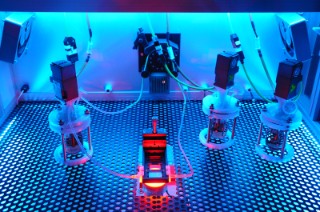
    Ein Fluidkreislauf transportiert alle Flüssigkeiten zu den Bioreaktoren und zu dem mittig angeordnetem Mikroskop.
    © Fraunhofer ISC

    Human induced pluripotent stem cells (hiPSCs) are considered as a promising tool in medicine, with the potential to unlock treatments for many health conditions such as neurodegenerative diseases and disorders. However, producing large amounts of hiPSCs remains a challenge. Researchers from the Fraunhofer Translational Center for Regenerative Therapies TLC-RT at the Fraunhofer Institute for Silicate Research ISC have now developed a bioreactor that can be used for automated long-term culturing of hiPSCs.

    more info
  • Virtual 3D environment / 2025

    Robot with LiDAR Laser Explores Danger Zones

    Research News / January 02, 2025

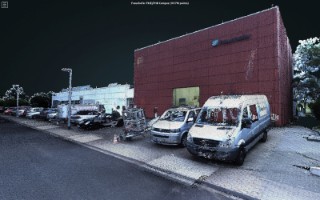
    In der visuellen Darstellung werden die Punktwolken durch Kamerabilder eingefärbt. So entsteht eine virtuelle 3D-Umgebung, die Anschaulichkeit mit exakten geometrischen Informationen verbindet. In der virtuellen Szenerie kann man sich frei bewegen.
    © Fraunhofer FKIE

    Robot systems explore unfamiliar terrain, buildings or danger zones with cameras. In the 3D-InAus project, researchers from the Fraunhofer Institute for Communication, Information Processing and Ergonomics FKIE are using a LiDAR laser on a mobile robot, emitting laser pulses to measure distances. The results are used to produce geometrically accurate 3D environments.

    more info
  • Paludicultures as an alternative, bio-based raw material for paper packaging / 2025

    Sustainable Packaging from Peatland Plants

    Research News / January 02, 2025

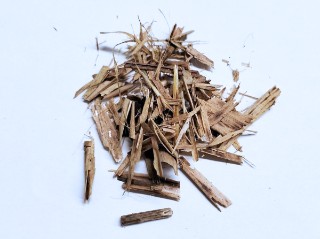
    Im Vergleich zu Holz zeichnet sich Rohrglanzgras durch seinen niedrigeren Ligningehalt aus.
    © Fraunhofer IVV

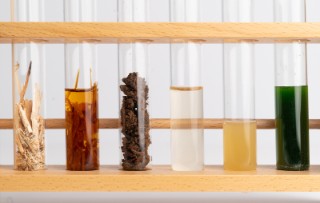
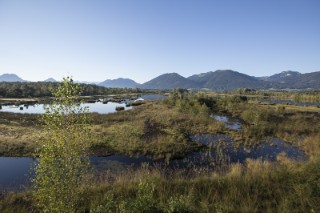
    Paludicultures such as peat moss, reed and reed canary grass are already used as construction materials, animal feed and foodstuff. Due to their low lignin content, however, peatland plants could also be an attractive alternative to wood as a raw material source for sustainable paper packaging. Researchers at the Fraunhofer Institute for Process Engineering and Packaging IVV have already demonstrated in feasibility tests that peatland plants have great potential for the manufacture of folding boxes, trays and similar items.

    more info
  • District heating networks / 2025

    Simulation Tool for Climate-Friendly District Heating Management

    Research News / January 02, 2025

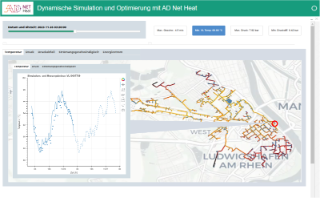
    Die graphische Benutzeroberfläche zeigt die aktuellen Temperatur- und Druckverhältnisse im Netz. Für jeden Knoten kann der zeitliche Verlauf in der Historie und Prognose dargestellt und gegebenenfalls mit Messungen verglichen werden.
    © Fraunhofer ITWM

    District heating networks are growing increasingly complex as a result of feeding in renewable energy and the trend toward decentralization. In the AD Net Heat project, Fraunhofer researchers are simulating heat flows throughout the entire network, predicting load peaks and helping to plan new grids.

    more info
  • Fraunhofer flagship project BAU-DNS / 2024

    Getting Existing Buildings Ready for the Future

    Press Release / December 05, 2024

    © Fraunhofer IBP

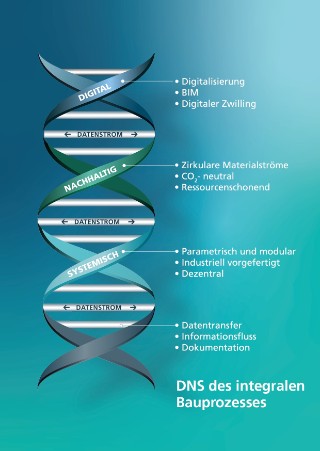
    A universal modular construction system: In the BAU-DNS flagship project, seven Fraunhofer institutes are developing innovative methods for the sustainable, modular and circular refurbishment of existing buildings, aimed at industry and small and medium-sized enterprises. They will be presenting recent findings and solutions at the BAU 2025 trade show in Munich from January 13 to 17.

    more info
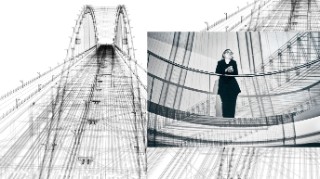
  • Informatikerin TagIine Treichel vom Fraunhofer IESE, lehnend an einem Inhouse-Geländer, im Hintergrund ist eine Konstruktionszeichnung einer Brücke großformatig an die Wand projiziert.
    © Foto: Jonas Ratermann; Hintergrund: Eugene Sergeev/istockphoto

    At least 8,000 highway overpasses and 17,630 kilometers of railway across Germany are dilapidated, but repairs and rebuilding will take time. How Fraunhofer technology is accelerating service and maintenance – so the Carola Bridge collapse in Dresden will remain an isolated incident. so the Carola Bridge collapse in Dresden will remain an isolated incident.

    more info
  • Dr. Thomas Schreiber
    © Marina Rosa Weigl

    Germany is investing in security and defense. There are numerous research projects ready to launch, not only within the Bundeswehr but also in the realms of civil defense and critical infrastructure. Not all challenges have been resolved yet, but the future is looking brighter.

    more info
  • ""
    © Adobe Stock

    Whether in electric vehicles, medical technology or smart devices, batteries have become a fixture of our everyday lives. As the global energy transition advances and the need for sustainable and low-emission technologies increases, demand for powerful energy storage solutions that conserve resources is also on the rise. Battery cells represent a key technology in the energy transition, but strong research and rapid innovation transfers are the only way to tap into their full potential and meet the demand for European battery cell manufacturing.

    more info
  • 3D-Suspensionskultur-Behälter.
    © Fraunhofer IBMT

    3D-Suspensionskultur-Behälter

    Developing new medications is becoming more and more expensive and taking longer and longer. Now, AI and miniature organs grown in a Petri dish are helping to change that.

    more info
  • Dr. Karin Burger
    © Sebastian Arlt

    The tiniest parts of matter provide insight into big contexts. Sunlight, magnetism and molecular interactions are just some of the things that cannot be explained conclusively without them. As a basis for advanced technologies, quantum physics is set to achieve great things across a range of different areas. What is the current status of advances in quantum computing, communications, imaging and sensors?

    more info
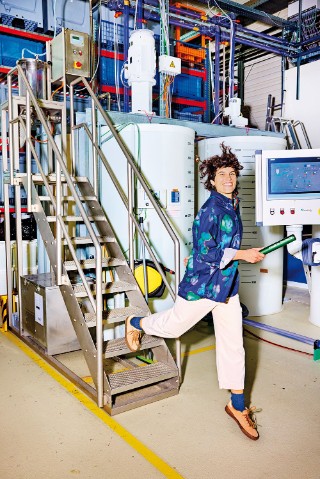
  • Fraunhofer IGCV-Wissenschaftlerin Violetta Schumm, im inszenierten Stapellauf mit einem Staffelstab in der Hand, auf dem Sprung von der Treppe einer Nassvliesanlage.
    © Fraunhofer / Norman Konrad

    Innovationssprünge machen: Violetta Schumm findet am Fraunhofer IGCV neue Optionen für die Nassvliestechnologie.

    Products from Germany’s factories enjoy an excellent reputation. In 2017, the “Made in Germany” label was ranked first in a study by statistics portal and market research firm Dalia Research. A recent study by entrepreneurship platform Meisterkreis, transformation research agency Sturm und Drang and agency group Serviceplan Group found that 25 percent of consumers in Europe, China and the United States favor German brands. Or rather, they still do. There is a trend toward domestic products, notably driven by U.S. President Donald Trump and his “America First” policy. And, as the study also reveals, German products have a worsening image here in their home country. Some 42 percent of German participants indicated that their reputation has declined. So how is the German art of engineering doing? Which technologies and methods might help to secure a competitive edge internationally? And how can the research sector support industry?

    more info
  • ""
    © Fraunhofer / Jonas Ratermann

    Science year 2025 - Energy of the Future: Fraunhofer is working to further develop and refine hydrogen technologies and geothermal systems while boosting their efficiency and at the same time to make nuclear fusion possible in the long term as an ecofriendly source of energy. The German Federal Ministry of Education and Research (BMBF) has dedicated Science Year 2025 to these energy forms of the future.

    more info
  • Dr. Steffen Sydow, Fraunhofer WKI
    © Fraunhofer / Marko Priske

    Fungal mycelium as a construction material, ecofriendly concrete and smart recycling solutions pave the way for climate neutrality.

    more info
  • " "
    © Jonas Ratermann

    The weapons available for fighting dangerous bacteria are losing their edge, and life-threatening infections are increasingly resistant to treatment. There are hardly any substitutes available so far, making it high time someone took action.

    more info
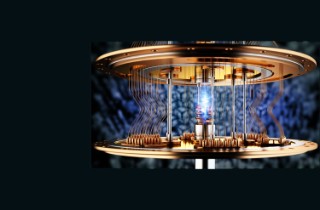
  • 3D-Illustration eines funktionierenden Quantencomputers.
    © Getty Images

    Fraunhofer-Forschende entwickeln Quantensysteme für verschiedene Anwendungen und Branchen, um damit Antworten auf die großen Herausforderungen unserer Zeit zu finden – ob Klima, Gesundheit, Verkehr oder Sicherheit.

    more info
  • What the future is made of

    Circular economy

    Justus von Freeden
    © Sonja Och

    Raw materials are scarce. Time and again, shortages have forced companies to cut back on their production. The circular economy may be the solution — for far more than just the climate.

    more info
  • Fraunhofer brought the first quantum computers to Germany in November 2020. It's now putting them into operation. Neuromorphic computing, trusted computing and quantum computing are the three pillars for building a future.

    more info
  • Welcome to the world of quanta, where nothing seems logical, but everything appears possible. A new era is dawning with quantum technologies helping us to better understand and order our world. Fraunhofer is bringing science to applications.

    more info
  • Fraunhofer Institute Center Dresden / May 18, 2026 - May 20, 2026

    Dresden Battery Days 2026

    Solid electrolyte batteries are considered potential candidates that can overcome the disadvantages of conventional lithium-ion batteries in terms of safety and energy density. However, we are not yet seeing entry into the mass market and therefore ask ourselves: Where do solid electrolyte batteries stand today? Exchange different perspectives at our two-day meeting and discuss where you see solid electrolyte batteries – ante portas or still as a vision?

    more info
  • RPTU Kaiserslautern / March 18, 2026 - March 19, 2026

    International Commercial Vehicle Technology Symposium Kaiserslautern 2024

    Nutzfahrzeuge Silhouette
    © freepik

    The Commercial Vehicle Technology Symposium is a two-day conference held on the campus of the Rhineland-Palatinate Technical University Kaiserslautern-Landau (RPTU). The conference includes approximately 50 technical papers and poster presentations focusing on international trends and technological developments in the commercial vehicle industry. The symposium will be accompanied by a trade exhibition with companies and a special vehicle exhibition.

    more info
  • Fraunhofer IFAM / February 25, 2026 - February 26, 2026

    Symposium on Innovations in Drones and Autonomous Systems for Wind Park Operations

    This symposium will convene scientists, researchers, and industry experts to explore the latest advancements in technologies for wind turbine inspection and maintenance across various environments. The program will focus on innovative inspection methods, challenges in maintenance within offshore and onshore environments, successful repair strategies, and the integration of robotics and automation. Additional topics will include the training and qualification of service personnel, as well as sustainability and environmental protection during inspection and repair activities.

    more info
 

Fraunhofer videos

Research visualized


Publication Database of the Fraunhofer-Gesellschaft

Articles, conference contributions, research reports, studies, patents: Fraunhofer-Publica documents the publications and patents that result from the research activities of the Fraunhofer institutes.